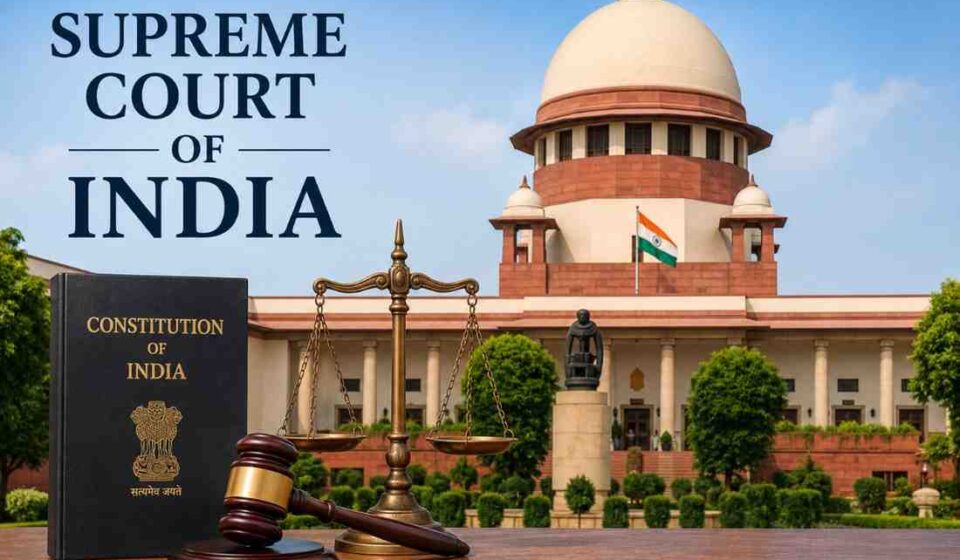
Supreme Court Questions Husband’s ₹9,000 Monthly Income Claim in Maintenance Case: What It Means for Spousal Support in India

The Supreme Court of India continues to emphasize the importance of fair spousal maintenance in matrimonial disputes. In a recent hearing, the Court expressed strong doubts over a husband’s claim of earning just ₹9,000 per month, calling it unrealistic in today’s economic landscape. This case has drawn attention to how courts assess financial capacity and enforce maintenance obligations.
Case Background
The dispute started when the wife appealed a High Court order. The trial court had initially granted her a lump-sum alimony of ₹6 lakh. Seeking better financial security, she requested either ₹30 lakh as a one-time settlement or ₹12,000 per month as maintenance.
The husband, working as a daily wager, argued that his income—around ₹325 per day, totaling roughly ₹9,000 monthly—made higher payments impossible. He also mentioned supporting his children’s education with help from his siblings.
Supreme Court’s Strong Observations
A bench comprising Justices Vikram Nath and Sandeep Mehta heard the matter and showed clear skepticism toward the husband’s financial disclosures.
1. Doubting Low Income Claims in Modern Times Justice Vikram Nath directly questioned the plausibility: “Who earns ₹9,000 these days?” The Court observed that such a figure appears inconsistent with prevailing minimum wages and living costs across most parts of the country.
2. The “Beg, Borrow, or Steal” Obligation Justice Sandeep Mehta reminded everyone of a long-standing principle in Indian family law. He stated that a husband must fulfill his duty to maintain his wife—even if it requires “beg, borrow, or steal.” This remark, though firm, highlights the moral and legal priority given to preventing destitution of spouses.
3. Emphasis on Verification The bench warned that it might summon the husband’s employer or initiate an official inquiry to verify his actual earnings. This signals courts’ growing unwillingness to accept potentially understated income declarations without scrutiny.
Why This Case Matters: Key Legal Principles Reinforced
Indian courts have consistently interpreted maintenance laws (under Section 125 CrPC, Hindu Marriage Act, and related provisions) with a focus on equity and social justice. Here’s what this hearing underscores:
- Earning Capacity Over Declared Income: Courts increasingly look at a person’s ability to earn rather than just self-reported figures. An able-bodied individual cannot easily escape responsibility by claiming minimal income, especially when it seems implausibly low.
- Maintenance as a Social Welfare Tool: The law aims to ensure that a dependent spouse (often the wife) does not face financial hardship post-separation. This aligns with constitutional values of dignity and equality.
- Crackdown on Misrepresentation: By threatening employer verification, the Supreme Court is sending a strong message against filing misleading affidavits. False claims can backfire and prolong litigation.
- Balancing Responsibilities: While protecting wives from vagrancy, courts also consider genuine financial constraints. However, the burden of proof often lies heavily on the paying spouse to demonstrate limited means transparently.
Broader Context of Spousal Maintenance in India
Maintenance disputes form a significant portion of family court cases. Factors courts typically consider include:
- Lifestyle and standard of living during marriage
- Income and assets of both parties
- Age, health, and educational qualifications
- Number of dependents (children, elderly parents)
- Inflation and rising living expenses
Recent judgments have stressed that maintenance should be “reasonable and realistic,” reflecting current economic realities rather than outdated assumptions. Awards vary widely—from a few thousand rupees in modest cases to substantial amounts when the payer has significant resources.
Implications for Husbands and Wives
For Husbands: Accurate and verifiable financial records are crucial. Understating income can lead to adverse inferences and higher awards. Those in informal sectors should maintain bank statements, tax returns, or other proofs of earnings.
For Wives: This ruling reinforces the right to seek enhancement if initial awards prove inadequate. Documenting the marital standard of living and the husband’s potential earnings strengthens claims.
For Legal Practitioners: The case highlights the need for thorough evidence gathering, including income verification through third parties when necessary.
Challenges in Enforcement
Despite progressive judicial observations, enforcement of maintenance orders remains a pain point. Many recipients struggle with delayed payments or non-compliance. Suggestions for improvement include linking maintenance to salary deductions, faster contempt proceedings, and better inter-state coordination.
Conclusion: A Step Toward Fairer Outcomes
The Supreme Court’s intervention in this matter reinforces that spousal maintenance is not merely a legal formality but a vital social obligation. By questioning unrealistic income claims and reiterating the duty to support one’s spouse, the Court upholds the principles of justice and equity in family law.
The final verdict is still awaited, but the observations already serve as persuasive guidance for lower courts. As India’s economy evolves, family laws must continue adapting to ensure maintenance awards are just, sustainable, and reflective of ground realities.
This case reminds us that marriage carries lifelong responsibilities. While divorce or separation ends the relationship, the duty of care—especially toward vulnerable spouses—endures.
Have you encountered similar maintenance disputes? Share your thoughts in the comments below. For personalized legal advice, consult a qualified family lawyer.