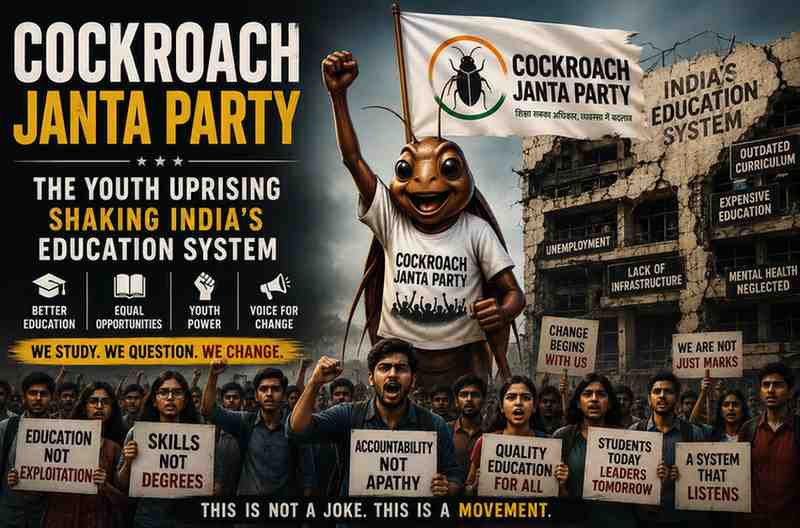

Picture this: thousands of young people, many still in their teens or early twenties, gathering under the scorching Delhi sun at Jantar Mantar. They wear cockroach masks, wave Indian flags, chant slogans of resilience, and refuse to back down. This isn’t a scene from a movie—it’s the reality of the Cockroach Janta Party (CJP) protests that have swept across India in 2026. What started as a satirical jab at a controversial remark has ballooned into a full-blown youth movement demanding accountability in the education system.
In a country where competitive exams like NEET decide futures, repeated paper leaks, technical glitches, and delayed results have pushed students to the edge. The CJP protests highlight not just one scandal but a deeper crisis of broken promises, lost opportunities, and mounting despair. Let’s dive into what this movement is really about, why students are hitting the streets (and sometimes striking), its significance, and what it means for India’s future.
How It All Began: From a Courtroom Remark to a National Movement
The spark came in mid-May 2026. During a court hearing, Chief Justice of India Surya Kant reportedly made observations about unemployed youth turning to activism, likening some to “cockroaches” and “parasites”—comments he later clarified were aimed at those with fake degrees. But the damage was done. Young Indians, already frustrated with joblessness and systemic failures, flipped the insult into empowerment.
Abhijeet Dipke, a 30-year-old postgraduate student from Boston University, founded the Cockroach Janta Party (CJP) as a satirical online platform. Within days, it exploded on social media with millions of followers. The “cockroach” symbol became one of resilience—surviving against odds, refusing to be crushed. Protests followed in cities like Pune, Jaipur, Lucknow, Bengaluru, Hyderabad, and crucially, Delhi’s Jantar Mantar.
By late June, the movement escalated with an indefinite sit-in, hunger strikes (including by climate activist Sonam Wangchuk), and support from various student groups, farmers’ unions, and left-leaning organizations. It wasn’t just memes anymore; it was real bodies on the ground demanding change.
Why Students Are Protesting and Striking
Students aren’t out there for fun. The triggers are painfully real:
- NEET-UG Paper Leak and Chaos: The 2026 NEET exam was marred by leaks, leading to cancellations, re-tests, and widespread suspicion of rigging. Aspiring doctors poured in years of preparation, coaching fees, and emotional investment only to see the system fail them. Many students faced mental breakdowns; reports of suicides linked to the stress added fuel to the fire.
- Repeated Exam Irregularities: Beyond NEET, issues plague other tests—technical glitches in online exams, delayed results, opaque evaluation processes, and recruitment scams. Students travel across states, spend heavily on coaching, and often return empty-handed.
- Unemployment and Crushed Dreams: Millions of educated youth face joblessness. The promise of “acche din” feels hollow when degrees don’t translate to opportunities. Family pressure, financial burdens, and a sense of betrayal by institutions amplify the anger.
- Lack of Accountability: The core demand is the resignation of Union Education Minister Dharmendra Pradhan, whom protesters hold responsible for systemic lapses. Other demands include compensation for affected students (e.g., ₹10,000 hardship allowance or more for suicides), mandatory backup exam dates within 72 hours, transparency in paper checking, age relaxations for delays, and independent tech audits of exam bodies.
Students strike or join sit-ins because peaceful protest feels like the only language left when petitions and social media posts go unheard. Many are first-generation learners from middle-class or rural families. For them, one leaked paper isn’t just an inconvenience—it’s a shattered dream, mounting debt, and a lost year. The indefinite sit-in and hunger strikes show their determination: “We won’t go quietly.”
Left student bodies like AISA and SFI have joined, broadening it to larger issues of education equity, while keeping a cautious eye on the movement’s satirical roots and possible political links.
The Significance of the CJP Movement
This isn’t just another protest. Its importance runs deep:
- Youth Awakening: CJP represents Gen Z’s political coming-of-age. Using satire, social media, and symbols, it has mobilized digitally native youth who might otherwise feel disconnected from traditional politics. With lakhs of online followers and on-ground turnout, it proves young Indians can organize rapidly without heavy party machinery.
- Spotlight on Education Crisis: It has forced national conversation on exam reforms. India’s massive youth population (demographic dividend) is at risk if the system remains broken. Issues like coaching mafia, paper leaks, and mental health are now harder to ignore.
- Demand for Systemic Reform: The five-point “exam manifesto” goes beyond one minister—it calls for structural changes: better technology, transparency, compensation mechanisms, and accountability. This could push policy shifts in bodies like NTA (National Testing Agency).
- Symbol of Resilience and Satire as Resistance: Reclaiming “cockroach” turns humiliation into strength. It echoes historical movements where the marginalized used humor and persistence against power. Protesters sing rebellious songs, hold placards, and invoke icons like Bhagat Singh, Ambedkar, and Phule—blending patriotism with critique.
- Broader Socio-Economic Echoes: It highlights inequality. Urban coaching centers thrive while rural students struggle. Unemployment, rising costs of education, and suicides reflect deeper governance questions. Support from farmers and activists links education to livelihood issues.
- Democratic Vibrancy: Peaceful protests at Jantar Mantar (a historic dissent site) reaffirm constitutional rights to assemble and speak. Court interventions, like restoring CJP’s social media handles, underscore judicial balancing of free speech and order.
In a polarized landscape, CJP has cut through with its youth-centric, non-partisan (at least initially) appeal, though opposition parties have shown solidarity.
Challenges, Criticisms, and Ground Realities
No movement is perfect. Critics dismiss CJP as a “B-team” of opposition elements or question its long-term vision. Some student groups worry about political hijacking. Heat, police presence, and fatigue test protesters’ resolve during sit-ins.
Implementation gaps exist too. While demands are clear, translating them into policy requires sustained pressure. Mental health support for affected students remains inadequate, and systemic corruption in exams is entrenched.
Yet, the energy is undeniable. Parents, working professionals, and ordinary citizens join, turning it into a wider call for “Bhay Mukt Bharat” (fear-free India) where youth can question power without reprisal.
What Lies Ahead: Hope or Hype?
As the sit-in continues and more cities join, the government’s response will be telling. Dismissing protesters risks alienating an entire generation. Addressing core issues—strengthening exam integrity, expanding seats in quality institutions, skill development, and job creation—could turn anger into constructive change.
For students, this is personal. It’s about reclaiming their future from a system that seems rigged against them. Whether CJP evolves into something bigger or fades, it has already shifted the narrative: youth voices matter, and they won’t be silenced.
India’s demographic advantage is its young population. Ignoring their pain—paper leaks, suicides, unemployment—threatens that very advantage. The cockroaches are marching, not to destroy, but to survive and build a better system.
In the words of protesters: they persist, they demand, and they refuse to disappear. The coming weeks and months will show if their swarm forces real reform or remains another footnote in India’s protest history. One thing is clear—the youth are watching, organizing, and refusing to let their futures be “leaked” away.