
Schools of Jurisprudence: A Complete Guide

Not what the law says. Not which section covers which offence. But what law actually is — where it comes from, why people obey it, and whether something is truly “law” just because a government passed it. Jurisprudence is the branch of legal…
Essentials of a Valid Contract: A Complete, Simple Guide
Let’s say you hired a contractor to renovate your kitchen. You both agreed on the work, the price, and the timeline. He took the advance, did half the job, and disappeared. You want to sue him. But can you? The answer depends on one thing — whether…
Fundamental Rights under the Indian Constitution: Articles, Meaning, and Exceptions
Imagine waking up one morning and finding out that the police arrested your neighbour overnight — no charges, no court, no explanation. Or that a school down the road refused to admit a child simply because of her religion. Or that a newspaper was shut…
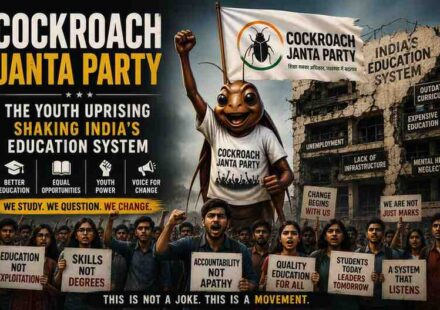
Cockroach Janta Party: The Youth Uprising Shaking India’s Education System
Picture this: thousands of young people, many still in their teens or early twenties, gathering under the scorching Delhi sun at Jantar Mantar. They wear cockroach masks, wave Indian flags, chant slogans of resilience, and refuse to back down. This isn’t…
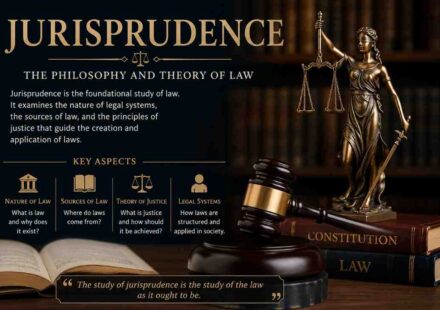
Concept, Nature, and Scope of Jurisprudence: Understanding the Philosophy Behind the Law
Have you ever wondered what truly makes a law “law”? Is it just a set of rules written in thick books, or is there something deeper — a philosophy, a purpose, a way of thinking that shapes how societies function? That’s where jurisprudence comes in.…
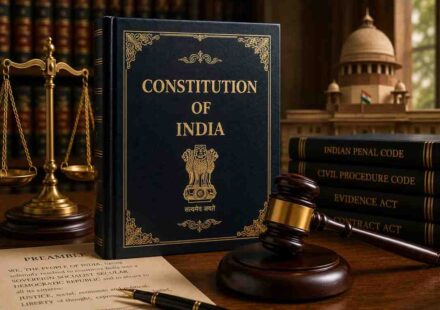
Powers and Functions of the President of India: The Guardian of the Constitution
When we think of the President of India, the image that often comes to mind is someone standing tall on Republic Day, saluting the armed forces, or addressing the nation on important occasions. But behind the ceremonial dignity lies one of the most…
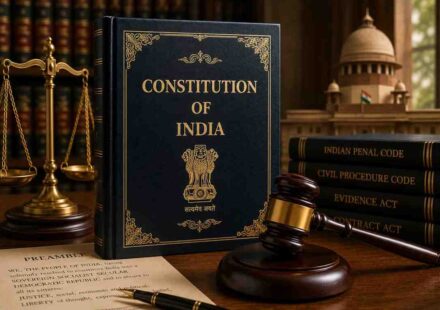
What Are Writs? Types, Uses, and How They Protect Your Legal Rights
Imagine you’re wrongfully detained, or a government official refuses to do their job, or a lower court steps way out of line. In a system that values justice, you need a fast, powerful way to push back. That’s where writs come in. These…

National Commission for Men Bill 2025: Why India Needs It After the Ketan Agarwal Case
Introduction The tragic death of 26-year-old Ketan Agarwal in Pune has shaken many people. What started as an apparent accident at Lohagad Fort turned into an alleged murder case involving his fiancée Siya Goyal and her friend Chetan Chaudhary. The…

Doctrine of Indoor Management and Its Exceptions: A Complete Guide for Law Students
Introduction When you enter into a contract with a company, you generally assume that the people signing on behalf of the company have the authority to do so. But what happens if the company later claims that its directors did not follow the proper…
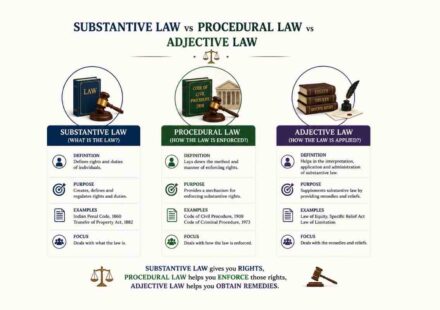
Substantive Law vs Procedural Law vs Adjective Law: Complete Guide with Examples for Law Students
Introduction Every law student comes across three important terms in the very beginning of their legal studies — Substantive Law, Procedural Law, and Adjective Law. These three together form the foundation of how the legal system works in India. Many…