
Maintenance under Section 144 of BNSS 2023: Rights of Wife, Children, and Parents

Economic security is a basic need in the family. When a person doesn’t fill out his wife, children or parents, despite being sufficient means, law intervenes. Section 144 of Bharatiya Nagarik Suraksha Sanhita (BNSS) 2023, applicable from 1 July 2024…

Police Powers: When can an arrest be made without a warrant?
Have you ever wondered how police arrest a person without court warrant? Many people believe that police can arrest whenever they want to. But this power in Indian law is limited and with conditions. The Indian Civil Security Code (BNSS) 2023,…
Supreme Court Quashes POCSO Case Against Teacher: Corporal Punishment Is Not Sexual Assault
A POCSO case is brought against a geography teacher who struck students on the back and waist for failing to respond to questions during class.He is defeated at the trial court stage. He is defeated in the High Court. He arrives at the Supreme Court —…
Rigorous Imprisonment vs Simple Imprisonment: Meaning, Difference, and Relevance in Indian Law
When a court convicts someone and sends them to prison, most people assume that jail is jail. Same cell, same food, same routine for everyone. That assumption is wrong. Indian criminal law divides imprisonment into two very different types — rigorous…
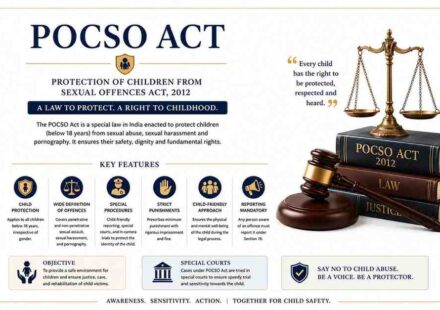
The POCSO Act: India’s Shield Against Child Sexual Abuse – A Deeper Look at Its Journey, Impact, and Challenges
Imagine a society where every child can grow up feeling safe, where their innocence is fiercely protected from the darkest forms of exploitation. For far too long, India grappled with the grim reality that its legal system treated crimes against children…

Capital Punishment in India: Rarest of Rare Doctrine and BNS
1. Introduction Every society draws a line somewhere. There are wrongs for which a fine is enough. There are wrongs for which imprisonment is the answer. And then, in some legal systems — including India’s — there are wrongs considered so grave, so…

Criminology Explained: Meaning, Nature, Scope and Importance
1. Introduction — Why Should a Law Student Care About Criminology? Imagine you are standing in a courtroom, defending a young man accused of theft. You can argue the law — section by section, precedent by precedent. But have you ever stopped to ask: why…
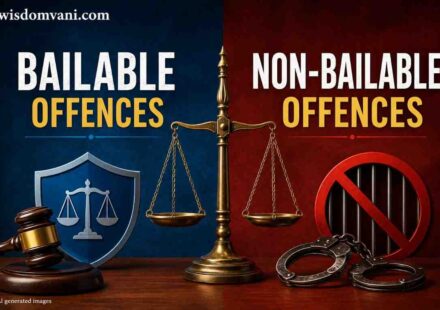
Bailable and Non-Bailable Offences Under Indian Criminal Law: A Complete Guide
If someone you know has been arrested, those two words — bailable or non-bailable — suddenly become the most important words in your life. They decide whether the person comes home the same day or stays in judicial custody for weeks or months. The good…
Types of Punishment Under Bharatiya Nyaya Sanhita (BNS) — Section 4 Explained
When India replaced its old colonial-era criminal code in 2024, a lot of things changed. The Indian Penal Code, 1860 — a law written under British rule and running for over 160 years — was repealed and replaced by the Bharatiya Nyaya Sanhita, 2023 (BNS).…
BNS Section 2 Definitions Explained: Simple Guide for Law Students
Hey future lawyers and law students! If you’ve just started studying the new criminal laws in India, you’ve probably seen the Bharatiya Nyaya Sanhita (BNS), 2023 mentioned everywhere. It replaced the old Indian Penal Code (IPC) from 1 July 2024. One…