Balancing Life and Liberty: Sonam Wangchuk’s Hunger Strike, Judicial Intervention, and the Limits of Protest

Introduction
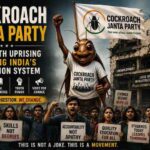
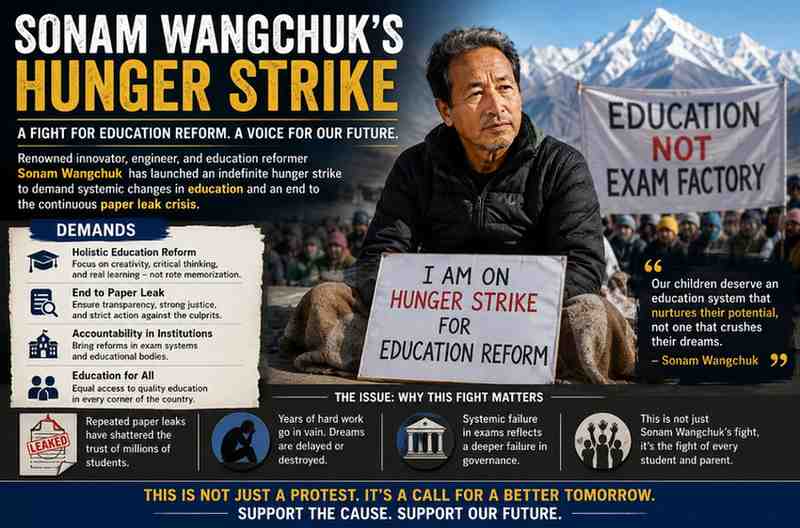
In the sweltering summer heat of Delhi’s Jantar Mantar, a familiar stage for public dissent, climate activist and educator Sonam Wangchuk began an indefinite hunger strike on June 28, 2026. Joining the ongoing protest by the Cockroach Janta Party (CJP), Wangchuk lent his voice—and his body—to demands for accountability in India’s education system. At the heart of the agitation was a call for the resignation of Union Education Minister Dharmendra Pradhan over alleged irregularities in competitive examinations, particularly the NEET-UG controversy that had shaken public trust.
Wangchuk, known for his tireless work on Ladakh’s environmental and cultural issues, framed his fast as a reluctant but necessary step. “I have been forced to sit here,” he told supporters, emphasizing that education had been close to his heart for decades. The protest drew students, youth, and activists, reflecting widespread frustration over exam leaks, student suicides, and perceived government apathy. Public sentiment was a mix of admiration for the protesters’ resolve and concern over the personal cost of such extreme forms of dissent. As days turned into weeks, Wangchuk’s deteriorating health thrust the protest into the national spotlight, raising profound questions about the state’s duty to protect life versus the citizen’s right to peaceful protest.
The Legal Framework: The PIL and Constitutional Obligations
The turning point came through a Public Interest Litigation (PIL) filed by Advocate Rakesh Kumar Saini in the Delhi High Court. The petition highlighted Wangchuk’s rapidly worsening condition after nearly three weeks without food. Medical reports cited significant weight loss (around 8-8.5 kg), weakness, dizziness, and risks of dehydration and electrolyte imbalance.
At its core, the PIL invoked Article 21 of the Indian Constitution—the fundamental right to life and personal liberty. Courts have long interpreted this right expansively to include the right to live with dignity and the state’s positive obligation to protect citizens’ lives. The petition argued that authorities could not remain passive spectators while a protester’s life hung in the balance. It also referenced provisions under the Bharatiya Nyaya Sanhita (BNS), 2023, particularly those dealing with abetment of suicide, suggesting that inaction by the state might amount to allowing a preventable tragedy.
The legal arguments were nuanced. While acknowledging the democratic value of hunger strikes as a form of non-violent protest (echoing Mahatma Gandhi’s legacy, whom Wangchuk paid tribute to before starting his fast), the PIL stressed that the right to protest is not absolute. It must be balanced against the state’s duty under Article 21 to prevent self-harm, especially when the protester’s health reaches a critical stage. This raised broader policy questions: Should the state intervene forcibly? At what point does a hunger strike cross from legitimate dissent into a situation requiring medical guardianship?
The Judicial Intervention: Delhi High Court’s Measured Response
The Delhi High Court responded with a balanced yet firm approach. A division bench comprising Chief Justice Devendra Kumar Upadhyaya and Justice Tejas Karia heard the matter urgently. Their observations underscored a central principle: “Every life is precious.” The court recognized the gravity of the situation without dismissing the underlying issues raised by the protest.
Rather than ordering immediate force-feeding—which could raise concerns of bodily autonomy—the bench directed the Centre and authorities to ensure daily medical monitoring by government doctors. It emphasized that if Wangchuk’s health deteriorated further, immediate medical intervention must follow based on expert advice. The court stopped short of micromanaging but made clear that the state could not wash its hands of responsibility. This intervention reflected judicial pragmatism: protecting life while respecting the protest’s democratic intent.
The ruling highlighted the evolving jurisprudence around hunger strikes. Indian courts have historically navigated similar cases—ranging from political fasts to prisoner protests—by prioritizing preservation of life while cautioning against turning protests into spectacles of self-destruction.
Current Status and Human Rights Implications
On July 18, 2026—around the 21st day of the fast—Delhi Police acted on the High Court’s directions and medical advice. Wangchuk was shifted to Safdarjung Hospital amid his deteriorating condition. Police described the operation as peaceful and compliant with court orders, denying claims of force or lathi-charge. Protesters, however, alleged rough handling, with CJP founder Abhijeet Dipke claiming Wangchuk was “dragged away.” Hospital updates indicated he was conscious but weak, with signs of dehydration; he reportedly refused some interventions initially.
This development intensified the debate on human rights. Supporters viewed the removal as an infringement on the right to protest, arguing it undermined the moral force of non-violent resistance. Critics, including some opposition voices, called it undemocratic. On the other side, authorities and medical experts stressed the state’s parens patriae role—acting as a guardian to prevent irreversible harm.
The incident brings into focus key human rights tensions under Indian and international law. Article 19 guarantees freedom of speech and expression (including protest), but reasonable restrictions apply in the interest of public order and health. The UN’s approach to hunger strikes similarly balances individual autonomy with the duty to preserve life, often recommending dialogue and voluntary medical care over coercion.
Wangchuk’s case also spotlights larger issues: youth disillusionment with education, the effectiveness of hunger strikes in a modern democracy, and the state’s preparedness to engage with protesters before crises escalate.
Conclusion
Sonam Wangchuk’s hunger strike and the Delhi High Court’s intervention encapsulate a classic democratic dilemma—the clash between individual liberty and the collective duty to protect life. The court’s emphasis on medical monitoring and timely intervention strikes a pragmatic middle ground, affirming that while protest is a cherished right, no life should be sacrificed on its altar.
This episode serves as a reminder that robust dialogue between citizens and the state remains the best preventive medicine. As India grapples with issues of governance, education reform, and environmental justice, cases like Wangchuk’s test the maturity of our institutions. They call for compassion, accountability, and a commitment to resolving grievances through conversation rather than confrontation or coercion.
Ultimately, the resolution lies not just in hospitals or courtrooms, but in addressing the root causes that drive citizens to such extremes. In a vibrant democracy, every voice matters—but preserving the lives behind those voices matters most of all.