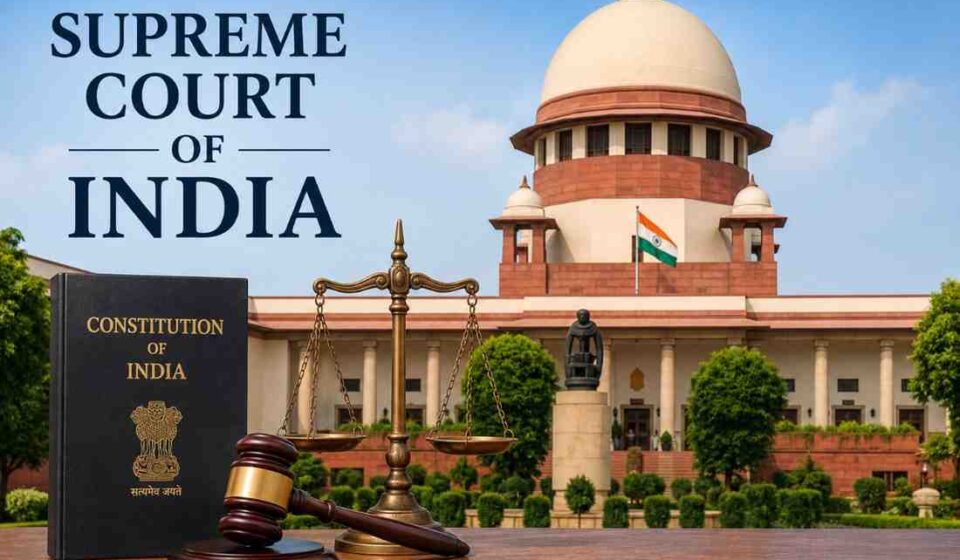
Supreme Court of India Seeks Centre’s Response on PIL Demanding Nationwide Ban on Animal Sacrifice in Religious Rituals

In a landmark development that reignites the conversation around animal welfare and religious traditions in India, the Supreme Court has issued notice to the Central Government on a Public Interest Litigation (PIL) calling for a complete ban on animal sacrifice during religious ceremonies. This case highlights the growing push to align cultural practices with modern ethical standards of compassion toward animals.
The Petition: Challenging a Decades-Old Exemption
Advocate Shruti Bisht (also referred to as Shruti Bist) has filed the PIL, which directly targets Section 28 of the Prevention of Cruelty to Animals (PCA) Act, 1960. This provision currently offers a “religious exemption,” stating that nothing in the Act renders it an offence to kill an animal “in a manner required by the religion of any community.”
The petitioner argues that this exemption has enabled widespread ritualistic slaughter in temples and during festivals, often involving methods that cause significant suffering. Despite existing laws like the PCA Act and the Wildlife Protection Act, 1972, authorities—including the Animal Welfare Board of India—have allegedly failed to curb these practices effectively.
Extending Constitutional Protections to Animals
A core argument in the petition revolves around Article 21 of the Indian Constitution, which guarantees the right to life and personal liberty. The plea contends that this fundamental right should not be limited to humans alone. Drawing on judicial precedents that interpret “life” expansively, the petitioner urges the court to recognize animals’ intrinsic right to live with dignity, free from unnecessary pain inflicted in the name of tradition.
This interpretation aligns with India’s evolving jurisprudence on animal rights, where courts have previously emphasized compassion and the duty of citizens under Article 51A(g) to protect and improve the natural environment, including wildlife.
A Comprehensive Roadmap for Change
The PIL goes beyond a simple ban. It proposes a holistic strategy to transition away from ritual sacrifice:
- Legislative Reforms: Amend or repeal Section 28 of the PCA Act to remove religious exemptions for cruelty.
- Awareness Campaigns: Government-led initiatives to educate communities about humane, symbolic, or plant-based alternatives that respect faith without harm.
- Monitoring and Collaboration: Stronger partnerships with NGOs, animal rights groups, and local authorities to oversee temple practices and ensure compliance.
- Enforcement Mechanisms: Stricter implementation of animal welfare laws and penalties for violations.
These suggestions aim to foster a cultural shift while respecting religious sentiments through non-violent expressions of devotion.
Current Status and Next Steps
On March 12, 2026, a bench comprising Justices Vikram Nath and Sandeep Mehta directed the Ministry of Animal Husbandry to file its response. The matter is scheduled for further hearing after four weeks.
This development comes amid broader discussions on animal welfare in India, including stray animal management and other ritual practices. It reflects a delicate balance between constitutional rights to religious freedom (Article 25) and the moral imperative to prevent unnecessary suffering.
Why This Matters: The Broader Debate
Animal sacrifice has deep historical roots in several Indian traditions, viewed by some as an essential offering. However, critics—including animal welfare organizations like PETA India—argue that in the 21st century, such practices conflict with principles of ahimsa (non-violence) and scientific understanding of animal sentience.
Supporters of reform point to successful precedents, such as state-level bans or restrictions in places like Himachal Pradesh and Tripura, where courts have intervened to prohibit sacrifices in temples. Opponents worry about judicial overreach into religious matters.
Potential Impact:
- Stronger animal protection laws.
- Promotion of ethical alternatives in worship.
- Heightened public awareness on compassion toward all living beings.
- Precedent for future cases balancing faith and welfare.
The Road Ahead
As the Supreme Court examines this petition, it presents an opportunity for India to lead in progressive animal welfare while honoring its pluralistic ethos. Whether through legislative changes, community dialogue, or innovative religious adaptations, the goal remains reducing harm without alienating cultural identities.
Animal lovers, legal experts, and faith leaders alike will be watching closely. This case could mark a pivotal step toward a more compassionate India.
What are your thoughts? Should religious exemptions for animal sacrifice be reviewed in light of modern ethics? Share your views in the comments below. For more updates on animal rights, constitutional law, and Indian judiciary developments, stay tuned.