

Rejection of Plaint: Order 7 Rule 11 CPC – A Complete Guide for Law Students

Introduction You have spent weeks preparing a civil suit. You have drafted a detailed plaint, paid the court fee, and filed it with high hopes. But instead of issuing summons to the defendant, the court suddenly rejects your plaint. This is not uncommon…
Jurisdiction of Civil Courts under CPC: Meaning, Types and Key Provisions
Introduction When you decide to file a civil suit, the first and most important question is: Which court has the power to hear your case? This power is called jurisdiction. If you file your suit in the wrong court, you may waste months or even years,…
50 Important MCQs on Part 2 of the Constitution of India (With Answers)
1. Which Articles of the Indian Constitution deal with Citizenship? A) 1-4 B) 5-11 C) 12-35 D) 36-51 Answer: B 2. In which Part of the Constitution is Citizenship mentioned? A) Part I B) Part II C) Part III D) Part IV Answer: B 3. Indian Constitution…
50 Important MCQs on Part 1 of the Constitution of India (With Answers)
In this post, we have curated 50 must-know MCQs with answers to help you master this topic for exams like UPSC, SSC, and State Judiciary. 1. Under Article 1, India is described as a: A. Federation of StatesB. Union of StatesC. Confederation of StatesD.…
Separation of Powers: Doctrine, Meaning, Case Laws and Critical Analysis in India
Introduction Every modern democracy faces one fundamental challenge: how to prevent any single branch of government from becoming too powerful. The answer lies in the Separation of Powers doctrine. It is one of the most important principles that shapes…
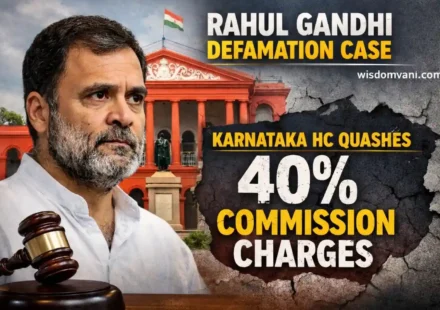
Rahul Gandhi Defamation Case: Karnataka HC Quashes 40% Commission Charges
In a significant legal victory for the Leader of the Opposition, Rahul Gandhi, the Karnataka High Court on February 17, 2026, quashed the criminal defamation proceedings initiated against him by the Bharatiya Janata Party (BJP). The…
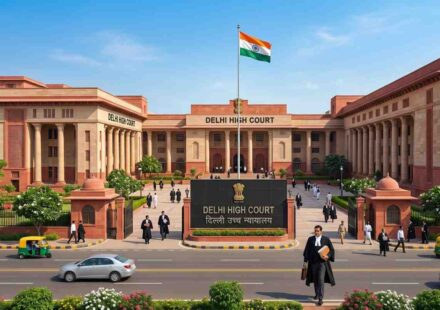
Rajpal Yadav Released: Delhi High Court Suspends Jail Sentence
In a major legal relief for veteran Bollywood comedian and actor Rajpal Yadav, the Delhi High Court (DHC) has ordered the interim suspension of his jail sentence. This development comes just weeks after the actor surrendered to serve time in a…
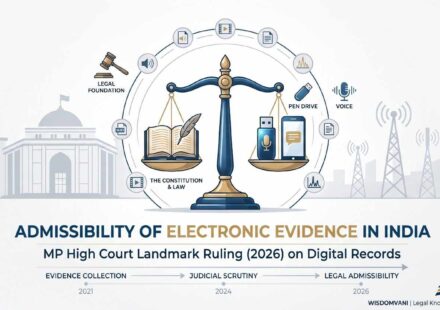
Why MP High Court Rejected Pen Drive Evidence in Malini Jain Case
In the digital age, audio and video recordings are often seen as “smoking guns” in legal battles. However, a recent landmark judgment by the Madhya Pradesh High Court serves as a crucial reminder: Electronic evidence is only as…
Top 50 CPC Part 3 Incidental Proceedings MCQs with Answers
1. Which section of the CPC deals with the power of the Court to issue commissions? A) Section 74 B) Section 75 C) Section 79 D) Section 80 Answer: B 2. A commission can be issued for which of the following purposes? A) To examine any person B) To make a…
50 Essential CPC Part 2 MCQs: Execution of Decree
No. Question Options (A, B, C, D) Correct Answer 1 Provisions relating to execution of “Orders” are given in: A) Section 34,B) Section 36,C) Section 38,D) Section 42 B 2 A decree may be executed by: A) Court which passed it,B) Court to…