
Audi Alteram Partem: The Right to be Heard – Complete Guide for Law Students

Introduction In every legal system, fairness is considered the soul of justice. One of the most important principles that ensures fairness is Audi Alteram Partem. This Latin phrase means “Hear the other side” or “No one should be condemned unheard.” This…
Rejection of Plaint: Order 7 Rule 11 CPC – A Complete Guide for Law Students
Introduction You have spent weeks preparing a civil suit. You have drafted a detailed plaint, paid the court fee, and filed it with high hopes. But instead of issuing summons to the defendant, the court suddenly rejects your plaint. This is not uncommon…
Jurisdiction of Civil Courts under CPC: Meaning, Types and Key Provisions
Introduction When you decide to file a civil suit, the first and most important question is: Which court has the power to hear your case? This power is called jurisdiction. If you file your suit in the wrong court, you may waste months or even years,…
Separation of Powers: Doctrine, Meaning, Case Laws and Critical Analysis in India
Introduction Every modern democracy faces one fundamental challenge: how to prevent any single branch of government from becoming too powerful. The answer lies in the Separation of Powers doctrine. It is one of the most important principles that shapes…
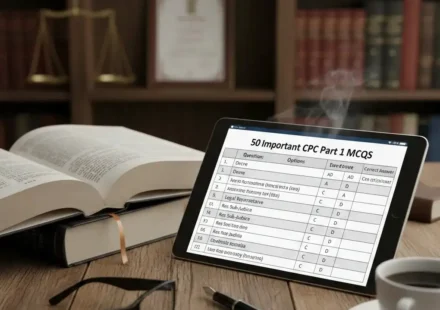
50 Important CPC Part 1 MCQs with Answers
No. Question Options (A, B, C, D) Correct Answer 1 The Code of Civil Procedure, 1908, came into force on? A) 1st Jan 1908, B) 1st Jan 1909, C) 1st April 1909, D) 31st Dec 1908 B 2 Which section of the CPC defines a “Decree”? A) Section…
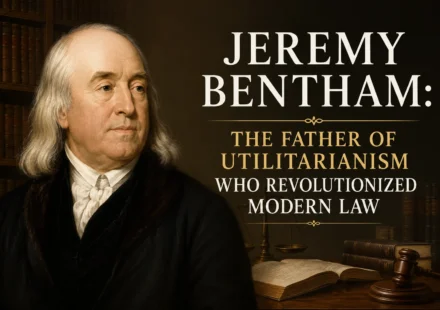
Jeremy Bentham: The Father of Utilitarianism Who Revolutionized Modern Law
What if the entire purpose of law wasn’t just to punish wrongdoers, but to create the greatest happiness for the greatest number of people? That bold idea didn’t come from a politician or a philosopher locked in an ivory tower. It came from Jeremy…
The Doctrine of Parens Patriae in India: Understanding State Guardianship
Imagine a child left without parents, a person with severe mental illness unable to make decisions, or a community facing an environmental disaster. Who steps in to protect their interests? In many legal systems, including India’s, the answer lies in an…
Delegated Legislation in Administrative Law
Introduction In today’s world, the work of the government has become extremely complex. Laws are needed on hundreds of subjects like environment, health, education, banking, food safety, and technology. It is not possible for Parliament or State…
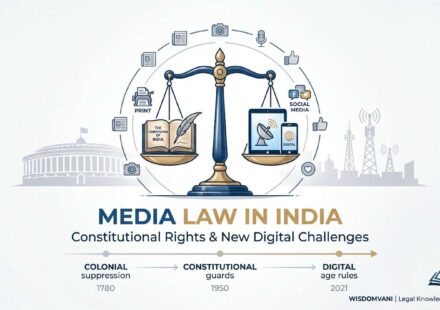
Evolution of Media and Media Law in India: Colonial to Digital Era
Media is often described as the fourth pillar of Indian democracy. It plays a crucial role in informing citizens, exposing wrongdoing, and ensuring accountability of those in power. The journey of media and the laws governing it in India reflects a shift…

Freedom of Speech and Expression: Article 19(1)(a) and Reasonable Restrictions
1. Introduction Think about this for a moment. Without the freedom to speak, how would you protest a government policy you believe is unjust? Without the freedom to write, how would journalists expose corruption? Without the freedom to express, how…